The Invisible Problem: Your Products Don't Exist to Google
You've created a great digital product. You've written a compelling description. You've set a fair price. You've listed it on Payhip. Now you wait for Google to send buyers your way.
Months pass. Nothing happens.
This isn't because your product isn't good enough. It's because Payhip's product pages lack the technical infrastructure that Google requires to discover, understand, and rank your content.
What Google Needs to Rank Your Product Page
Search engines evaluate product pages on several technical factors. Here's what matters and where Payhip falls short:
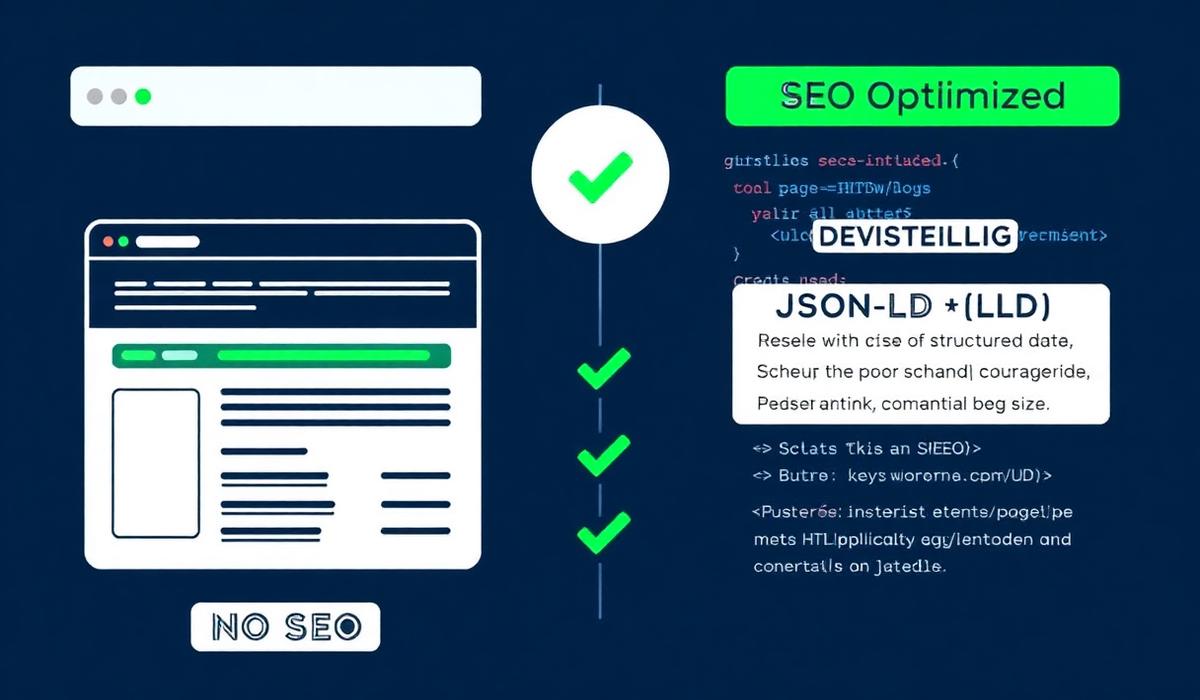
1. Structured Data (JSON-LD Schema Markup)
Structured data tells Google exactly what your page contains. For product pages, this means Product schema — a standardized format that communicates your product name, description, price, availability, and reviews.
When Google finds Product schema on a page, it can display rich results in search — showing your price, rating, and availability directly in the search results. This dramatically increases click-through rates.
Payhip: No structured data on product pages. Google sees raw HTML with no machine-readable product information.
Creastor: Automatic JSON-LD Product schema on every product page — name, description, price, currency, and availability are all marked up for Google.
2. Meta Tags and Title Tags
Title tags tell Google what your page is about. Meta descriptions tell searchers why they should click. These are the most fundamental SEO elements.
Payhip: Generic title tags. Limited meta description customization. Your product page title often includes "Payhip" branding rather than being optimized for your target keyword.
Creastor: Customizable title tags and meta descriptions for every product. You control exactly what appears in search results.
3. Semantic HTML Structure
Google's crawlers parse HTML structure to understand content hierarchy. Proper use of H1, H2, and H3 headings, along with semantic elements like <article>, <section>, and <main>, helps Google understand and rank your content.
Payhip: Standard HTML without semantic optimization. The page structure is functional but not designed for crawler comprehension.
Creastor: Semantic HTML with proper heading hierarchy, structured content sections, and schema markup integrated into the page structure.
4. Page Speed and Core Web Vitals
Google uses page speed metrics — Largest Contentful Paint (LCP), Cumulative Layout Shift (CLS), and Interaction to Next Paint (INP) — as ranking factors. Faster pages rank higher.
Both Payhip and Creastor perform reasonably well here, but Creastor's static-first architecture tends to produce faster load times for product pages.
5. Mobile Responsiveness
Over 70% of social-to-commerce traffic arrives on mobile devices. Google uses mobile-first indexing, meaning it evaluates the mobile version of your page for ranking purposes.
Both platforms are mobile-responsive, but Creastor's mobile-first design philosophy means the mobile experience is the primary design target, not an afterthought.
Why This Matters More Than You Think
The Value of Organic Product Traffic
Consider this scenario: your Notion budget template page ranks #3 on Google for "notion budget template." That keyword gets 2,400 searches per month. A #3 ranking captures approximately 8% of clicks — that's 192 visitors per month.
If your conversion rate is 3% (reasonable for buyer-intent search traffic), that's 5–6 sales per month from a single keyword. At $29 per template, that's $145–$174/month in purely passive, recurring revenue from one product page.
Now multiply by 10 products, each ranking for its target keyword. That's $1,450–$1,740/month in revenue from Google alone — with zero advertising spend, zero social media effort, and zero ongoing work.
This is the traffic Payhip's SEO limitations prevent you from capturing.
Social Media Traffic vs SEO Traffic
| Factor | Social Media Traffic | SEO Traffic |
|---|---|---|
| Consistency | Algorithm-dependent, volatile | Steady and predictable |
| Cost | Requires constant content creation | Free after initial optimization |
| Intent | Browsing, entertainment-first | Actively searching to buy |
| Conversion rate | 1–2% typical | 3–5% typical |
| Longevity | Dies when you stop posting | Compounds over months and years |
| Scalability | Limited by your posting capacity | Limited only by keyword volume |
SEO traffic doesn't replace social media — it complements it. But creators who rely solely on social media are building on rented land. Algorithm changes, platform bans, and content fatigue can wipe out your traffic overnight.
Organic search traffic is owned infrastructure. It compounds. It converts at higher rates. And it works while you sleep.
How to Fix Your Digital Product SEO
Option 1: Move Your Store to an SEO-Optimized Platform
The simplest solution is to sell on a platform that generates SEO-friendly product pages automatically. Creastor builds structured data, semantic HTML, proper meta tags, and fast-loading pages into every product listing.
You don't need to understand SEO technically. The platform handles it. You just need to:
Option 2: Build Your Own Website
You could build a personal website with SEO-optimized product pages using WordPress, Webflow, or a custom site. This gives you maximum control but requires:
For most creators, this is unnecessary complexity when platforms like Creastor handle everything natively.
Option 3: Use Content Marketing to Drive Traffic to Payhip
If you want to stay on Payhip, you can create blog content on a separate platform (Medium, WordPress, Substack) that ranks on Google and links to your Payhip products. This works but requires:
This is a workaround, not a solution. It adds complexity rather than solving the underlying infrastructure problem.
The SEO Advantage Is Compounding
Every month your product pages aren't on Google, you're missing cumulative organic traffic. SEO is a compounding channel — the sooner you start, the sooner your pages build authority, and the more traffic they capture over time.
Moving to an SEO-optimized platform isn't just about today's rankings. It's about building an asset that generates increasingly valuable traffic for months and years to come.
Create your SEO-optimized store on Creastor →