Selling Digital Products

    Payhip Course Builder Review: What's Missing for Serious Course Creators in 2026

    Payhip lets you build and sell courses for free. But if you're planning to make courses your primary revenue stream, the missing features will cost you students and sales.

    11 min read

    What Payhip's Course Builder Actually Offers

    Payhip added course hosting to differentiate itself from Gumroad, which has no course builder at all. The feature set includes:

  1. Lesson creation with text, video, and file attachments
  2. Module organization to group lessons into sections
  3. Student enrollment tied to your Payhip checkout
  4. Basic progress tracking for students to mark lessons complete
  5. Unlimited courses on all plans, including free
  6. For a free platform, this is genuinely useful. You can create a structured course, attach it to a payment, and deliver the content without any third-party integrations. Many simple courses — a 5-lesson email copywriting tutorial, a 3-module recipe collection — work perfectly fine with these tools.

    The problems emerge when you try to build the kind of course that commands premium pricing and delivers premium outcomes.

    What's Missing — And Why It Matters

    1. No Drip Content Scheduling

    Drip content releases lessons on a scheduled timeline after enrollment — Day 1 you get Module 1, Day 7 you get Module 2, and so on.

    Why this matters:

  7. Prevents overwhelm — Students who see 40 lessons at once often feel paralyzed and never start
  8. Creates accountability — Scheduled releases create a rhythm that keeps students engaged
  9. Reduces refund rates — Students who consume content gradually are more likely to complete the course and see results, which means fewer refund requests
  10. Enables cohort-based courses — Drip scheduling is essential for courses where students progress together
  11. On Payhip, all content is available immediately. There's no scheduling option. For self-paced mini-courses, this is fine. For comprehensive programs, it's a significant limitation.

    2. No Completion Certificates

    Certificates aren't just decoration. They serve three critical business functions:

  12. Professional credibility — Students in professional development courses need proof of completion for their employers or clients
  13. Social proof — Students who share certificates on LinkedIn and social media provide free marketing for your course
  14. Perceived value — A course that issues a certificate feels more substantial than one that doesn't
  15. Payhip doesn't generate certificates automatically. To offer them, you'd need to manually create each certificate (in Canva, for example), personalize it with the student's name, and email it individually. That works for 10 students. It doesn't work for 100.

    3. Limited Student Progress Dashboards

    Payhip lets students mark lessons as complete, but there's no visual progress dashboard — no completion percentage, no time-to-completion estimates, no streak tracking.

    Progress visualization matters because it triggers the endowment effect — the psychological principle that people value what they've already invested in. A student who sees "67% complete" is dramatically more likely to finish than one who has no sense of their progress.

    4. No Course Bundles

    Bundling multiple courses together at a discounted price is one of the most effective upselling strategies for course creators. A student who buys your "Instagram Growth" course for $97 might pay $197 for a bundle that includes "Instagram Growth + Content Calendar + Reel Editing."

    Payhip doesn't support course bundles natively. You can create workaround solutions, but they're clunky and don't provide the seamless enrollment experience that purpose-built bundle features offer.

    5. No Community Integration

    Modern course platforms increasingly integrate community features — discussion forums, Q&A sections, peer interaction — directly into the course experience. Community increases completion rates, creates accountability, and builds the kind of social proof that sells future courses.

    Payhip has no community features. Students learn in isolation.
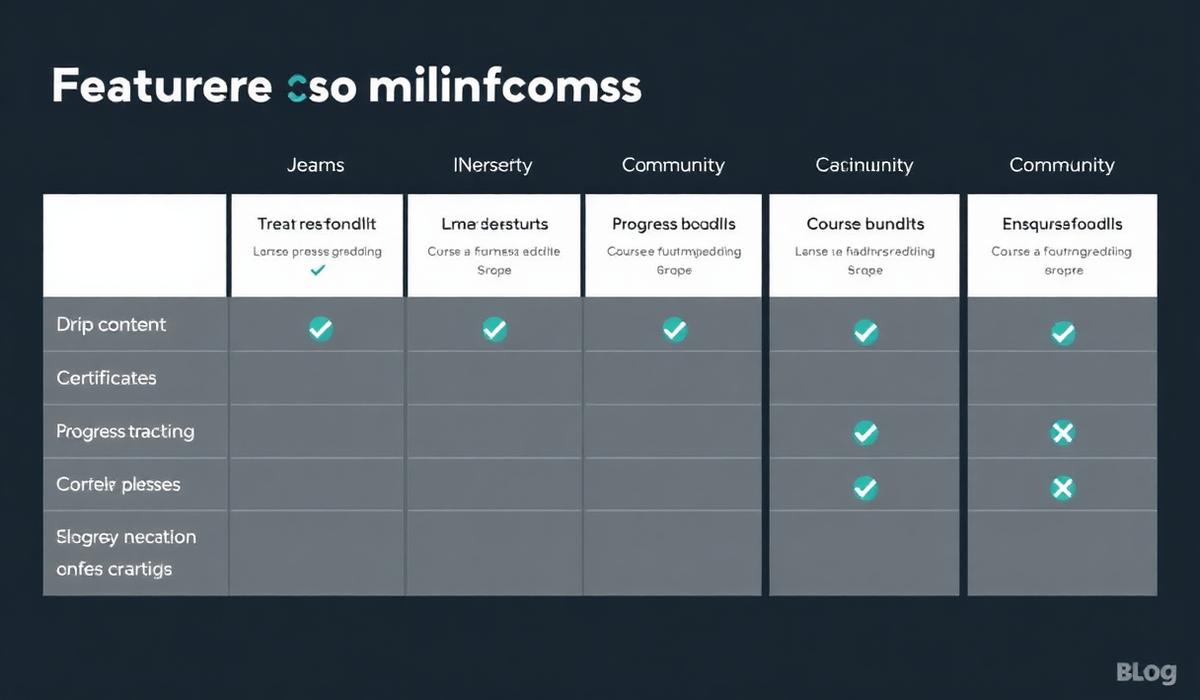
    Feature comparison table of Payhip course builder versus dedicated course platforms showing gaps in advanced learning management features
    Feature comparison table of Payhip course builder versus dedicated course platforms showing gaps in advanced learning management features

    When Payhip's Course Builder Is Enough

    Payhip's course builder works well for:

  16. Simple mini-courses (under 10 lessons) that are secondary to your digital download business
  17. Free courses used as lead magnets to build your email list
  18. Quick-start guides that supplement a purchased template or tool
  19. One-time workshops that don't require ongoing student engagement
  20. If your course is a supporting product rather than your primary revenue stream, Payhip's builder is functional and the price (free) is right.

    When You Need More

    You've outgrown Payhip's course builder if:

  21. Your course has 20+ lessons organized into multiple modules
  22. You need drip scheduling to prevent overwhelm and boost completion
  23. Students expect certificates for professional development
  24. Your course price is $97+ and students expect a premium experience
  25. You want to bundle courses for higher average order value
  26. Community and discussion are part of your course value proposition
  27. Better Alternatives for Course Creators

    Creastor — Best for creators who sell courses alongside digital products from social media. Full course builder with structured lessons, progress tracking, and integrated checkout. No need for separate course and storefront platforms.

    Teachable — Best for course-first creators who need advanced LMS features. Strong student experience, affiliate management, and quizzes.

    Kajabi — Best for established creators ($10K+/month) who need courses, community, email automation, and a full website in one platform. Expensive at $149/month minimum.

    For most growing creators who sell from social media and want courses as part of a broader product mix, Creastor hits the sweet spot — a full course builder integrated with your storefront, email marketing, and social commerce tools, starting at $19/month.


  28. Best Payhip Alternative — Full platform comparison beyond courses
  29. Best Kajabi Alternative — Course platforms compared head-to-head
  30. How to Sell Digital Products Online — Build your full product ecosystem
  31. How to Price Digital Products — Price your courses for maximum revenue
  32. Frequently Asked Questions

    Is Payhip good for selling online courses?

    Payhip is adequate for creators who sell a course as a secondary product alongside digital downloads. The course builder handles basic lesson organization and video hosting. However, for creators whose primary income is courses, Payhip lacks drip content scheduling, completion certificates, student progress dashboards, and course bundling — features that improve student outcomes and reduce refund rates.

    Does Payhip have drip content for courses?

    No. Payhip releases all course content at once upon enrollment. There's no way to schedule lessons to unlock on a timed schedule. Drip content is important for courses that benefit from paced learning, accountability, and preventing students from skipping ahead.

    Can I issue completion certificates on Payhip?

    No. Payhip doesn't offer automated completion certificates. For professional development courses, coaching certifications, or any course where students want proof of completion, you'd need to manually create and send certificates — which doesn't scale.

    #payhip course builder#sell courses online#online course platform#payhip review#course creator tools#digital products